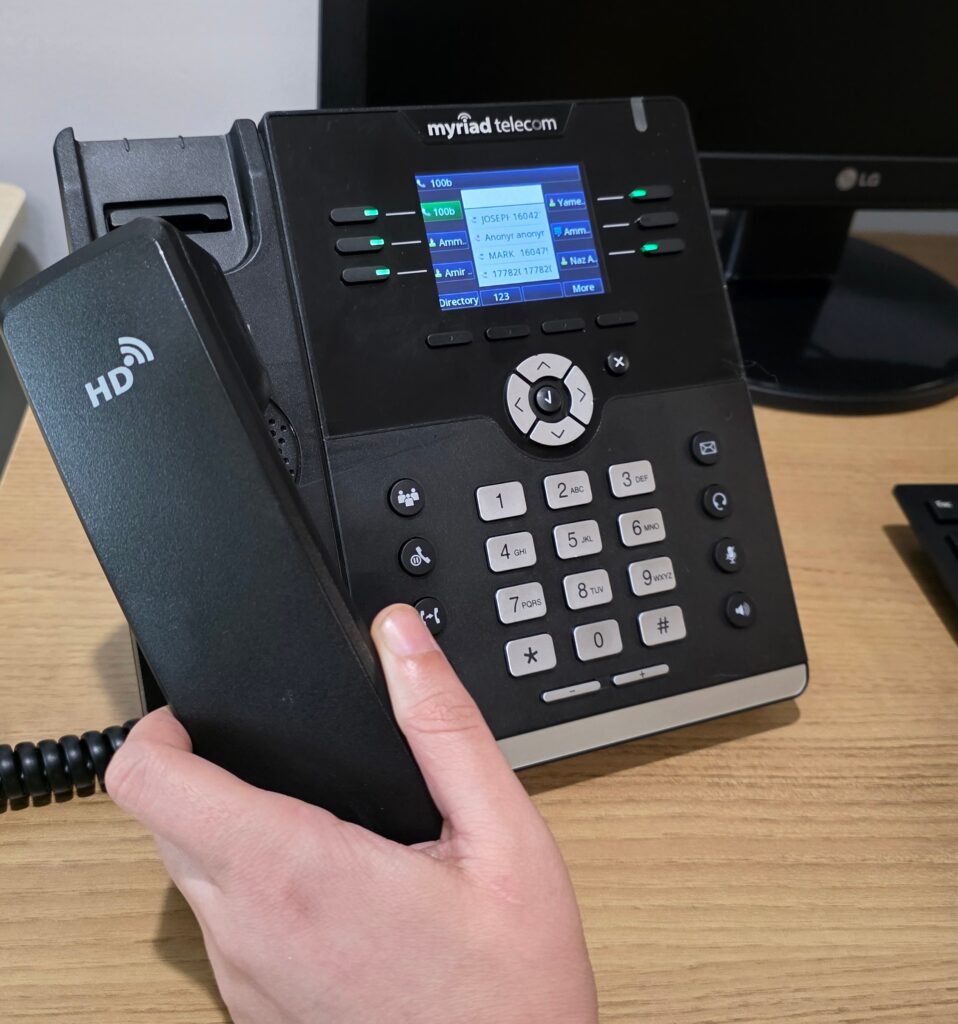
A missed call can mean a missed opportunity, delayed service, or a frustrated customer left waiting for answers. For organizations that depend on reliable communication, business VoIP systems are far more than a cost-saving replacement for traditional phone lines. They are a strategic investment that directly impacts customer experience, employee productivity, and business continuity.
Voice over Internet Protocol (VoIP) allows phone calls to travel over an internet connection instead of conventional telephone lines. While the concept is simple, selecting and supporting the right VoIP solution requires more consideration than comparing monthly subscription costs. The right system should make communication seamless for employees and customers alike without adding unnecessary complexity to your operations.
How Business VoIP Systems Transform Communication
Traditional phone systems are typically tied to a physical office location and a limited number of phone lines. VoIP systems, by contrast, create a unified communications environment that connects desk phones, computers, mobile devices, and remote employees under a single business phone system.
This means employees can answer calls from their office desk, home workspace, or mobile device while maintaining a consistent professional caller ID. For businesses with hybrid or remote teams, this flexibility can significantly improve responsiveness and service delivery.
Organizations such as law firms, healthcare providers, nonprofits, and growing businesses benefit from features like:
- Intelligent call routing
- Department-specific call queues
- Shared reception coverage
- Automated attendants
- Flexible after-hours call handling
Perhaps most importantly, VoIP supports business continuity. Calls can often be redirected to mobile devices or alternate locations when employees are away or unexpected disruptions occur. However, this level of flexibility depends on proper planning and infrastructure.
It is also worth noting that VoIP is only as reliable as the network supporting it. Poor Wi-Fi coverage, aging networking equipment, insufficient bandwidth, or the absence of a backup internet connection can lead to dropped calls and poor call quality. The phone system is just one piece of the overall communications solution.
Start by Understanding Your Call Flow
Before evaluating providers and feature lists, take a close look at how your organization currently handles incoming and outgoing calls. This process often reveals the functionality you actually need.
For example:
- A law firm may require direct extensions, reliable call routing, and clearly defined call-recording policies.
- A healthcare clinic may need fast response times while maintaining privacy and compliance standards.
- A nonprofit may need an affordable solution that allows a small team to support multiple programs.
- A field service business may need calls routed to mobile staff without exposing personal phone numbers.
Consider these practical questions:
- How many calls do you receive during peak business hours?
- Who answers calls when reception staff are unavailable?
- Do callers frequently need to reach specific departments?
- Are employees working from multiple locations?
- What happens if your internet connection or power fails?
Answering these questions is often more valuable than comparing feature checklists. Many organizations end up paying for advanced capabilities they never use while overlooking tools that would improve daily operations. A solution tailored to your workflow will almost always deliver more value than one with the longest feature list.
Features That Deliver Real Value
Most modern VoIP platforms offer similar core features, but their effectiveness depends on how they align with your business processes.
Popular features include:
- Auto attendants that guide callers to the correct department.
- Ring groups that allow multiple employees to answer a shared phone number.
- Call queues that manage high call volumes during busy periods.
- Voicemail-to-email functionality that makes messages easier to review and respond to quickly.
Mobile and desktop applications also provide significant flexibility when configured properly. Employees can make and receive business calls from approved devices while maintaining a consistent business presence.
When implementing these tools, organizations should establish clear expectations regarding availability, after-hours communication, notifications, and security. Some teams require maximum mobility, while others need stronger boundaries around when and where calls are handled.
Certain features deserve additional consideration before deployment. Call recording, for example, can improve training and quality assurance but may introduce compliance, consent, retention, and storage requirements. Similarly, business text messaging can improve convenience, but only when ownership, response procedures, and data handling policies are clearly defined.
Your Network Is the Foundation
High-quality voice communications depend on a stable and well-designed network.
Voice traffic requires consistent bandwidth and should not be forced to compete with video conferencing, large downloads, cloud backups, or guest Wi-Fi traffic. Fortunately, improving call quality does not always require an expensive internet upgrade.
A thorough assessment should examine:
- Internet performance and reliability
- Network hardware and switch capacity
- Cabling infrastructure
- Wireless coverage
- Expected call volumes
In many cases, simple improvements such as replacing outdated equipment, optimizing network settings, or implementing Quality of Service (QoS) controls can dramatically improve call performance.
Power protection is equally important. Many VoIP handsets rely on network equipment for power, which means phone service may be affected if networking hardware shuts down during an outage. Battery backups, secondary internet connections, or cellular failover options can help minimize downtime.
For organizations across the Fraser Valley, local weather events, infrastructure work, and unexpected service disruptions are practical reasons to include backup communication planning in any VoIP deployment strategy. The key question is not whether every business requires enterprise-grade redundancy, but how long your organization can afford to be without phone service.
Security and Privacy Must Be Part of the Strategy
Modern phone systems are connected platforms that include user accounts, management portals, integrations, call logs, voicemail services, and mobile applications. As with any connected technology, security should be part of the implementation plan from day one.
Organizations should:
- Use individual user accounts instead of shared credentials.
- Require strong passwords and multifactor authentication where available.
- Restrict administrative access to authorized personnel.
- Remove user access promptly when employees leave.
Employees should also be trained to recognize suspicious communications, including fraudulent account notifications, unauthorized call-forwarding requests, and deceptive voicemail alerts.
Mobile applications deserve special attention because they extend business communications beyond the office. Proper configuration and security controls help ensure company communications remain protected.
Learn more about securing mobile business communications here: mobile applications.
Businesses should also educate staff on common phone-based scams and social engineering tactics. For example, fraudulent support calls and voicemail notifications can be used as entry points for larger cyberattacks. Additional guidance is available here: suspicious voicemail notifications.
For organizations handling sensitive personal, healthcare, or financial information, it is equally important to understand where call recordings, voicemails, and communication logs are stored and how they are protected. While service providers may offer security features, responsibility for proper usage and policy enforcement ultimately remains with the organization.
Choosing a Provider Means Choosing Ongoing Support
Comparing monthly pricing is easy. Evaluating support quality is much more difficult until a problem arises.
Whether you’re onboarding new employees, redesigning call flows, or troubleshooting service issues, responsive support can significantly influence the success of your phone system.
When evaluating providers, ask:
- Who handles implementation and deployment?
- Who manages number transfers and handset configuration?
- Is staff training included?
- What support is available during and after business hours?
- Will the provider assist with network troubleshooting if call quality issues occur?
A successful implementation typically includes:
- Documenting existing phone numbers, extensions, call flows, and key contacts.
- Reviewing internet and network infrastructure before deployment.
- Designing call-routing processes around actual business operations.
- Testing emergency calling, voicemail, mobile applications, and failover procedures.
- Training employees on the features they use most frequently.
Number porting should also be carefully planned. Migrating existing business phone numbers can take time and requires accurate account information to ensure customers continue reaching your organization without interruption.
Keep Improving After Go-Live
Implementing a VoIP system should not be viewed as a one-time project. As businesses evolve, communication requirements change as well.
Regularly review:
- Missed call trends
- Queue performance
- Voicemail response expectations
- Directory accuracy
- Call-routing effectiveness
Gathering feedback from employees can help identify small improvements that remove everyday frustrations. In many cases, updating a call menu or adjusting a ring group delivers more value than investing in additional technology.
For organizations looking for a single trusted partner to support business phones, networking, cybersecurity, and ongoing IT needs, Myriad Technologies can help design a communications solution that is practical, secure, and easy to manage.
The goal is simple: ensure customers can reach your team when it matters most and give your employees the tools they need to respond with confidence.