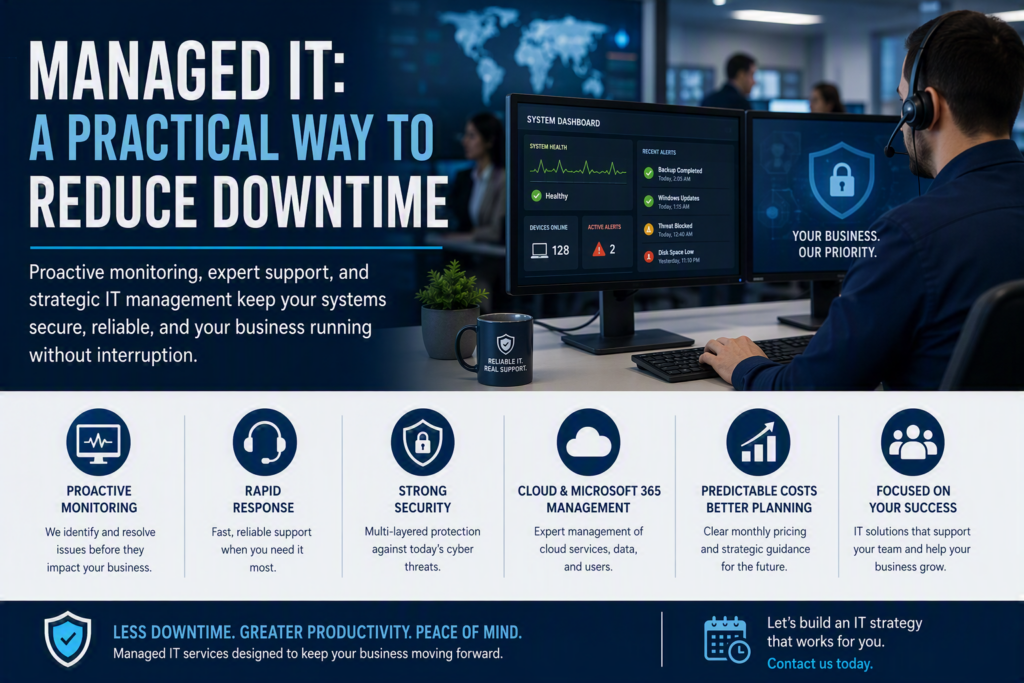
Technology problems rarely happen at a convenient time. A server failure, phishing attack, or internet outage can quickly bring productivity to a halt. Employees cannot access files, customers are left waiting, and day-to-day operations become increasingly difficult. Managed IT services are designed to minimize these disruptions by providing proactive support, ongoing monitoring, and expert guidance before issues become major business problems.
For small and midsize organizations, technology is no longer just a support function. It powers communication, collaboration, customer service, financial operations, and remote work. The question is not whether technology requires attention, but whether that attention happens proactively or after downtime has already affected the business.
What Is Managed IT?
Managed IT is an ongoing partnership with an external technology provider that supports and maintains your IT environment. Rather than only calling for assistance when something breaks, businesses receive continuous monitoring, maintenance, security management, and technical support.
This approach differs from traditional break-fix IT services. While break-fix support focuses on resolving issues after they occur, Managed IT focuses on preventing problems whenever possible. The result is a more stable and reliable technology environment that helps businesses operate efficiently.
The services included often vary based on the organization’s needs. A professional office may require Microsoft 365 administration, help desk support, and device management. A healthcare practice may focus on data protection, secure access controls, and minimizing disruptions to patient care. A nonprofit may need cost-effective technology solutions that protect donor and client information while staying within budget.
The goal is not to implement every available technology solution. Effective Managed IT starts with understanding how the organization operates and identifying the areas where downtime or security risks would have the greatest impact.
How Managed IT Reduces Downtime
Most technology disruptions are not caused by a single catastrophic event. In many cases, downtime results from small issues that go unnoticed over time, such as outdated software, aging hardware, weak network infrastructure, or backups that have never been tested.
Managed IT providers continuously monitor systems for warning signs and address issues before they become serious problems. This may involve applying updates, replacing failing hardware, optimizing performance, or identifying network issues before employees are affected.
When problems do occur, having access to a dedicated support team allows businesses to respond faster and restore operations quickly. Rather than scrambling to find help, employees know exactly who to contact and can receive assistance from a provider already familiar with their environment.
The Business Impact of Downtime
Downtime affects more than technology. Every minute employees cannot access critical systems can result in lost productivity, delayed customer service, and missed business opportunities.
For organizations that rely on email, cloud applications, scheduling platforms, or industry-specific software, even short interruptions can create significant operational challenges. Extended outages can also damage customer confidence and create unexpected costs related to recovery and lost business.
By proactively managing technology, businesses can reduce these risks and improve overall operational reliability.
Cybersecurity Is Part of Managed IT
Today’s cybersecurity threats are closely connected to everyday IT operations. Password management, software updates, user access, backups, and email security all play a role in protecting business data.
For many businesses, some of the most common risks include weak passwords, outdated software, lost devices, and phishing messages designed to trick employees into revealing sensitive information.
Managed IT services help strengthen security through:
- Multi-factor authentication (MFA)
- Endpoint protection
- Email filtering
- Patch management
- Backup monitoring
- User access reviews
- Security awareness training
These layered protections help reduce the risk of cyberattacks, data breaches, and costly business interruptions.
Cloud Services and Microsoft 365 Management
Many organizations now depend on Microsoft 365 and other cloud platforms for communication, collaboration, and data storage. While cloud services offer flexibility and convenience, they still require ongoing management and security oversight.
Managed IT providers can assist with account management, licensing, security configurations, data protection, and user support. They can also help businesses implement best practices for secure remote work and cloud collaboration.
Without proper management, cloud environments can become difficult to secure and maintain as organizations grow.
Predictable IT Costs and Better Planning
Hiring an internal IT team with expertise in cybersecurity, cloud services, networking, help desk support, and strategic planning can be expensive for many organizations.
Managed IT services provide access to a broader range of skills through a predictable monthly investment. This helps businesses avoid unexpected repair costs, emergency recovery expenses, and unplanned technology spending.
A strong technology partner also helps organizations plan ahead for hardware replacements, software upgrades, cloud migrations, and other projects. Instead of reacting to technology issues, businesses can make informed decisions that align with their goals and budgets.
What to Look for in a Managed IT Partner
Choosing the right Managed IT provider is about more than technical expertise. The provider should understand your business, communicate clearly, and respond effectively when support is needed.
When evaluating providers, consider asking:
- How quickly do they respond to urgent issues?
- What monitoring and preventive maintenance are included?
- How do they handle backups and cybersecurity?
- Will they explain recommendations in clear, non-technical language?
- Can they support future growth and technology projects?
A provider that takes the time to learn your organization can offer better recommendations and deliver support with less disruption to daily operations.
For organizations throughout Chilliwack and the Fraser Valley, working with a local technology partner can provide additional value. While remote support resolves many issues, there are situations where onsite assistance and familiarity with your environment make a meaningful difference.
Managed IT Should Support Your People
The true value of Managed IT is measured by its impact on the people who rely on technology every day. Employees should be able to do their jobs without constant interruptions, leaders should feel confident in their systems, and technology should support business growth rather than create obstacles.
If recurring IT issues, cybersecurity concerns, slow response times, or unreliable systems are affecting your organization, it may be time to evaluate your current approach. The right Managed IT strategy can reduce downtime, improve security, and give your team the support they need to stay productive and focused on what matters most.